
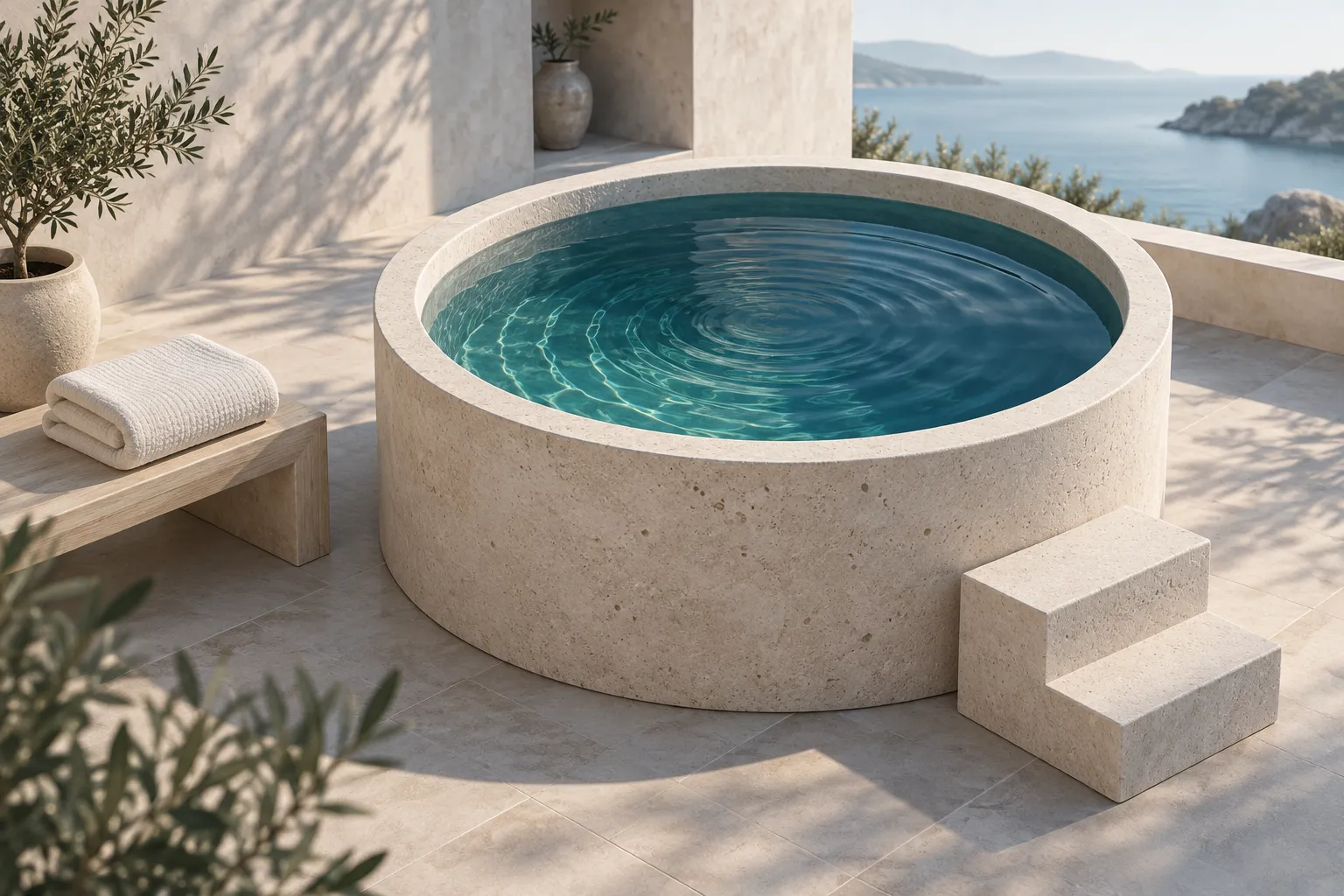
A cold plunge is a deliberate immersion in cold water, usually in a tub or pool. An ice bath is one version of it; visible ice is not the defining feature. For a beginner, the useful questions are whether cold immersion is appropriate for you, how to prepare, and what the evidence actually supports.
This guide covers those questions and shows how to keep a useful record if you choose to plunge. PlungeLab is a free cold plunge tracker for iPhone and Apple Watch, with optional Pro features for exploring personal patterns.
What are the benefits of cold plunging?
Research suggests cold-water immersion can reduce post-exercise soreness in some settings. Evidence for broader wellbeing benefits is still developing, and a result measured in a study does not mean every person will experience it.
Muscle soreness after exercise
A 2022 systematic review and meta-analysis found improvements in soreness and perceived recovery 24 hours after high-intensity exercise compared with passive recovery. Results depended on the exercise and outcome being measured. Feeling less sore is useful, but it does not establish that an ice bath improves every aspect of training.
A 2026 review of eight studies did not find consistent improvements in soreness or perceived recovery compared with control conditions. Differences between these reviews reinforce why it helps to ask which activity, timing, and outcome a claim refers to.
There is also a tradeoff for people focused on building muscle. A 2024 review of resistance-training studies suggests that regularly using cold-water immersion immediately after lifting may reduce muscle-growth adaptations. Recovery between demanding events and long-term training adaptation are different goals.
Stress, sleep, and mood
A 2025 review in PLOS ONE included 11 randomized studies and 3,177 participants. It found a reduction in stress at the 12-hour follow-up, but not at every measured time point. Some studies reported better sleep or quality of life; the review did not establish a mood benefit.
The authors highlighted limited study numbers, small samples in much of the evidence, and a lack of participant diversity. These findings are a reason to keep investigating, rather than a promise that a plunge will improve your sleep or mental wellbeing.
For the timing question, read cold plunges in the morning or at night.
If you already plunge, recording how you feel can help you describe your own experience more accurately. A personal log still cannot tell you that cold water caused a change.
Is cold plunging safe for everyone?
No. Cold immersion puts a sudden demand on the body. The RNLI explains that cold-water shock can trigger involuntary gasping, rapid breathing, and increased heart rate and blood pressure. Its guidance highlights water at 15°C / 59°F and below; that is a risk warning, not a recommended target or a guarantee that warmer water is safe.
Discuss cold immersion with a healthcare professional before trying it, especially if you have a heart condition, an abnormal heart rhythm, or high blood pressure. Harvard Health’s cardiology guidance cautions against cold plunges for people with cardiovascular disease, particularly rhythm abnormalities. If a clinician has advised you to avoid cold exposure, follow that advice.
An app, timer, or normal-looking heart-rate reading cannot establish that a session is safe. PlungeLab records sessions; it does not monitor you for emergencies.
How do you prepare for a cold plunge?
If cold immersion is appropriate for you and you choose to proceed, make preparation part of the session. A supervised setting with a clear exit gives you fewer things to manage than an unfamiliar body of open water.
- Arrange company and help. Do not plunge alone. Make sure someone is present who can help you get out and call for assistance.
- Check the entry and exit. Look for slippery surfaces and make sure you can leave without climbing over an obstacle. Open water adds currents, weather, water-quality, and access concerns; read the RNLI’s full open-water guidance before treating a lake or sea dip like a tub session.
- Prepare for afterward. Have a towel, dry clothes, and a warm place ready. The RNLI recommends preparing warm clothing and warming up carefully after leaving the water.
- Enter gradually. The RNLI advises entering slowly and avoiding jumping or diving straight in. Keep your head above water. Do not combine immersion with deliberate hyperventilation or breath-holding; the Royal Life Saving Society explains the blackout risk.
- Leave when you need to. A countdown is never a reason to remain in the water. If you feel unwell, stop and get help. Chest pain, fainting, serious breathing difficulty, or confusion call for urgent medical assistance.
You can continue cooling after you leave the water. The US National Weather Service warns that core temperature can keep falling after exit. Dry off, put on warm clothes, and pay attention to how you feel. Avoid alcohol before or during immersion.
How cold and how long should a beginner plunge?
There is no single temperature-and-duration combination established as safe and effective for every beginner. The 2025 PLOS review calls for more research into optimal protocols. A study’s water temperature and exposure time describe what researchers tested; they are not a personal prescription.
Your health, the setting, the water temperature, and your experience all matter. Get guidance appropriate to those conditions from a qualified professional. Avoid choosing a target simply because someone online completed it.
If you use a timer, treat it as a record of elapsed time. Ending sooner is always allowed. A longer session, colder water, or a completed app target does not prove a better outcome.
What should you record after a cold plunge?
A useful cold-plunge log captures enough context to make the session understandable later. Duration alone leaves out whether you were in your usual tub, a different setting, or water whose temperature you did not measure.
| Record | Why it helps |
|---|---|
| Date and time | Places the session in your routine and training schedule. |
| Session type | Keeps tub plunges, cold showers, and open-water sessions distinguishable. |
| Actual duration | Records what happened, including an early finish. |
| Water temperature, if known | Adds context; leave it blank rather than inventing a reading. |
| Mood before and after | Preserves a subjective observation without presenting it as a medical result. |
| Perceived intensity and notes | Records details you might otherwise forget, such as a hard training day. |
Keep observations specific. “Felt more awake afterward” is a useful note. It is still an observation from one session, and sleep, exercise, expectations, and other factors may also have influenced how you felt.
Track a cold plunge with PlungeLab on iPhone or Apple Watch
PlungeLab brings the session record into one place. Core session capture and history are free, and an Apple Watch is optional.
On iPhone, you can log a cold plunge manually with its date, duration, optional temperature, mood, intensity, and notes. Your history gives you a record to return to instead of relying on memory.
With the PlungeLab Apple Watch app, you can choose a session type, start recording from your wrist, and capture elapsed time and available heart-rate readings. Saved sessions transfer to your iPhone. Apple Watch Series 10 or later and Apple Watch Ultra (not SE) can add water-temperature readings when the capability is available and the sensor supplies data; other supported watches still offer manual capture.
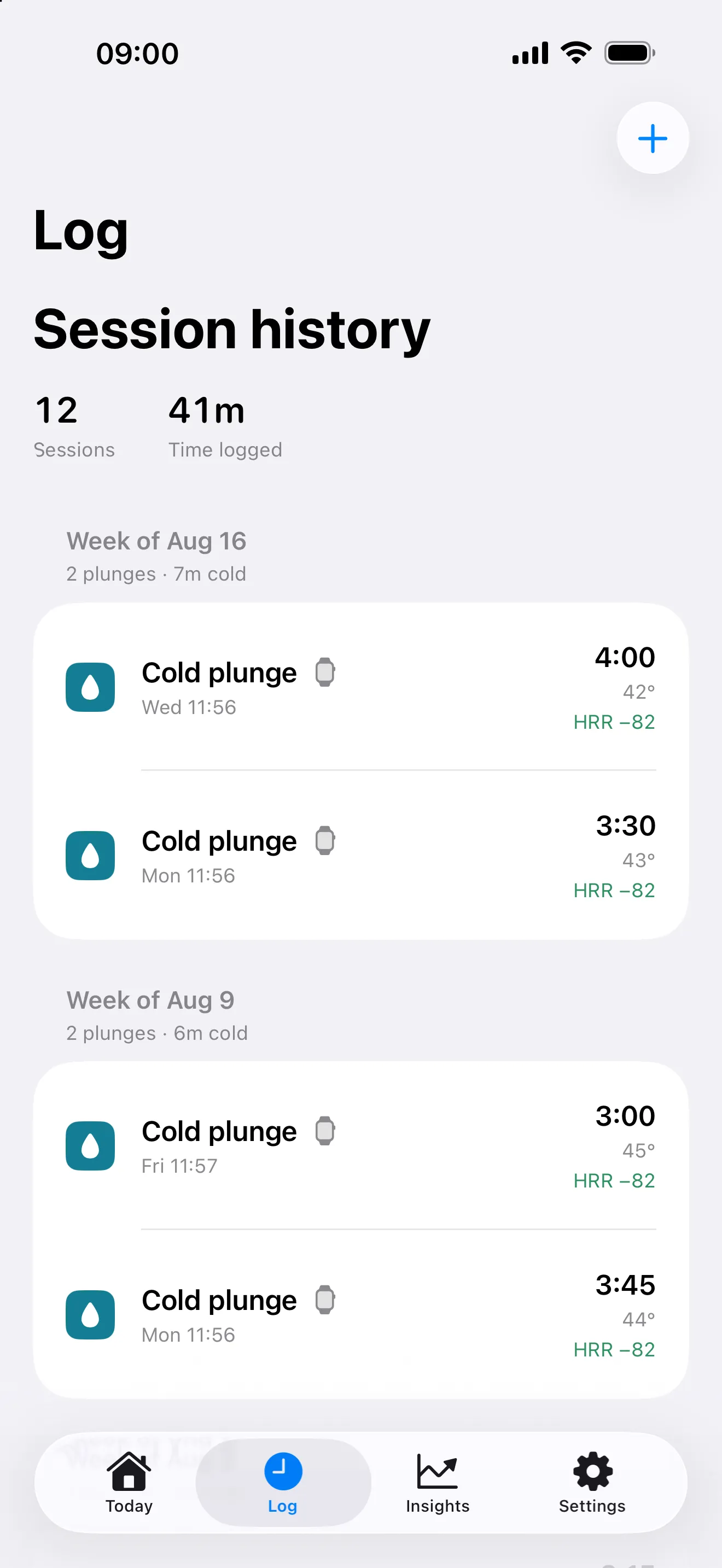
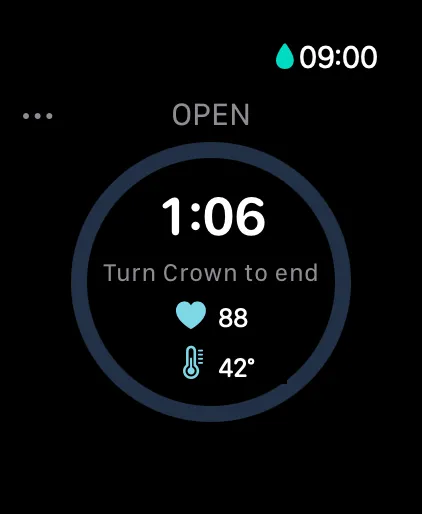
PlungeLab requires iOS 26 or later on iPhone and watchOS 11 or later on Apple Watch. Check Apple’s water-resistance guidance for your particular watch and band. Water resistance can diminish over time. For sauna sessions, use manual iPhone logging and leave the Watch outside.
What does PlungeLab Pro add?
Pro adds deeper analysis tools, including personal comparisons using available Apple Health data. The annual Pro plan offers a seven-day free trial for eligible customers, subject to the offer shown in the app. It renews into a paid annual subscription unless canceled; confirm the localized price, eligibility, renewal date, and cancellation terms in Apple’s purchase sheet.
Free capture and history remain useful without Pro. Personal comparisons need enough usable observations: the plunge-versus-rest comparison requires at least eight usable days in each group. A seven-day trial does not guarantee that an insight will be ready. Any comparison describes an association, not proof of cause and effect.
Session history and Apple Health analysis stay on your devices during ordinary app use. See how PlungeLab handles data for the full details.
Download PlungeLab on the App Store to record your sessions on iPhone or Apple Watch, then explore Pro if its additional tools fit your needs.
Frequently asked questions
Is an ice bath different from a cold plunge?
An ice bath is a form of cold-water immersion. The terms often overlap, but the presence of ice does not tell you the actual temperature. Use a measured temperature when available and record what you know.
Do I need an Apple Watch to use PlungeLab?
No. You can log sessions manually on iPhone and review your history for free. Apple Watch adds wrist-based capture and available heart-rate data; water-temperature readings are available on Apple Watch Series 10 or later and Apple Watch Ultra (not SE) when the capability and sensor readings are available.
Can a cold-plunge app tell me whether my session is safe?
No. Elapsed time and sensor readings are recording tools. They cannot assess every risk or replace supervision, medical guidance, or an emergency response.
Is PlungeLab free, or do I need a trial?
Core capture and session history are free. The optional seven-day trial applies to the annual Pro plan for eligible customers when the offer is available. Check the in-app purchase sheet for current terms.
Continue reading
- Cold Plunge Benefits: What the Research Shows examines the evidence and training tradeoffs.
- Cold Plunge Temperature and Duration: A Guide to the Research explains study conditions and measurements.
- How to Track a Cold Plunge with Apple Watch walks through the recording controls.
- What to Track in a Cold Plunge Journal—and Why It Matters provides practical fields and example notes.
Sources and editorial approach
This guide is written by the team that makes PlungeLab and includes links to our app. Scientific findings and safety guidance come from the sources below. We have not conducted a clinical study or had this guide medically reviewed. Research protocols are not presented as recommended exposure targets.
- Cain and colleagues, PLOS ONE (2025): cold-water immersion, health, and wellbeing.
- Moore and colleagues, Sports Medicine (2022): recovery after strenuous exercise.
- Bustos Carvajal and colleagues, Frontiers in Sports and Active Living (2026): water immersion and sports recovery.
- Piñero and colleagues, European Journal of Sport Science (2024): postexercise immersion and muscle growth.
- RNLI: cold-water shock and open-water preparation.
- Harvard Health (2025): cold plunges and heart risks.
- US National Weather Service: cold-water hazards and cooling after exit.
- Royal Life Saving Society UK: hyperventilation and breath-holding risks.
- Apple Support: Apple Watch water resistance.

Free session capture and history for iPhone and Apple Watch. Talk to the team.